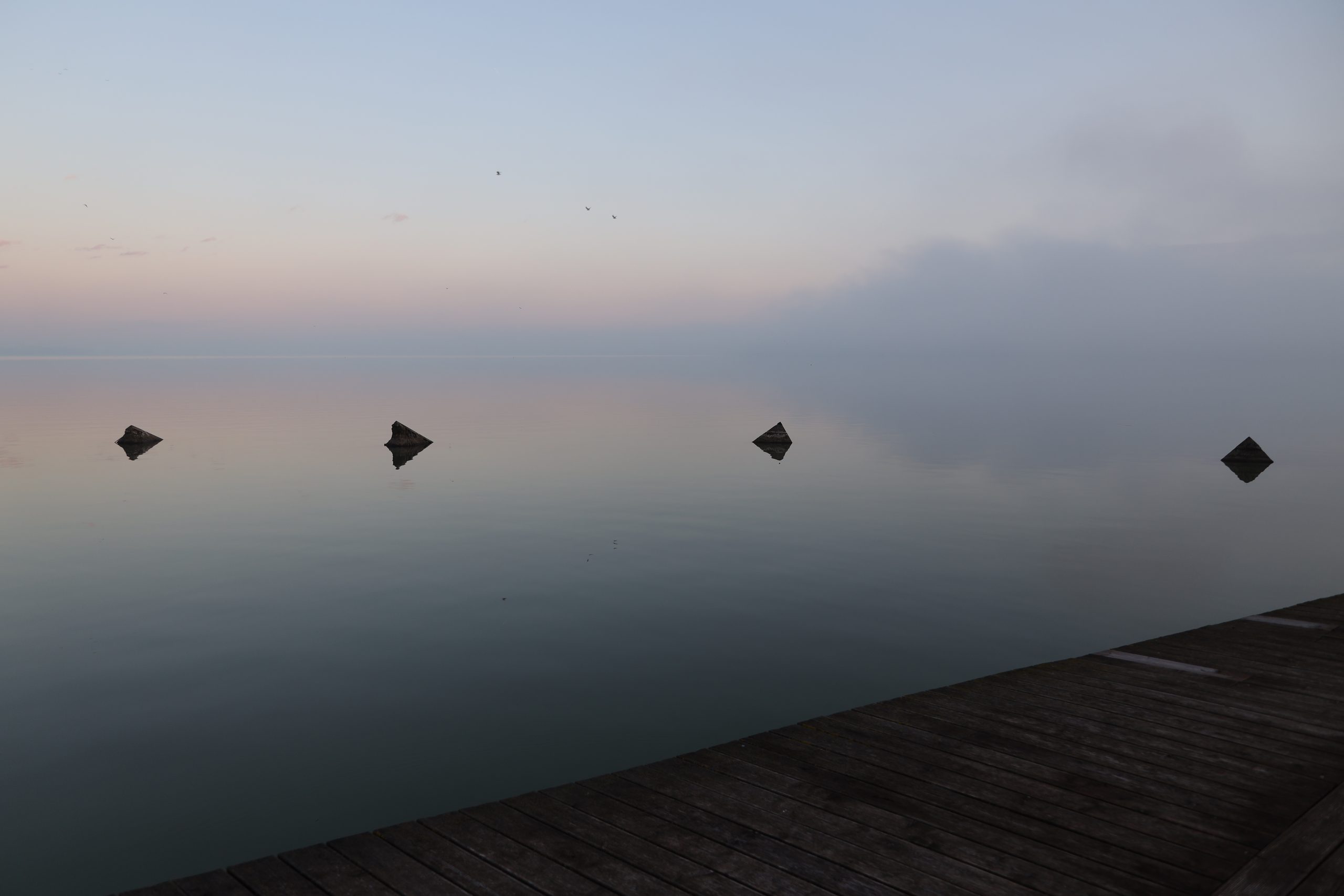
Calm water after the storm.
I would like to offer a place where even difficult feelings can grow quiet, and your own inner voice becomes audible again.
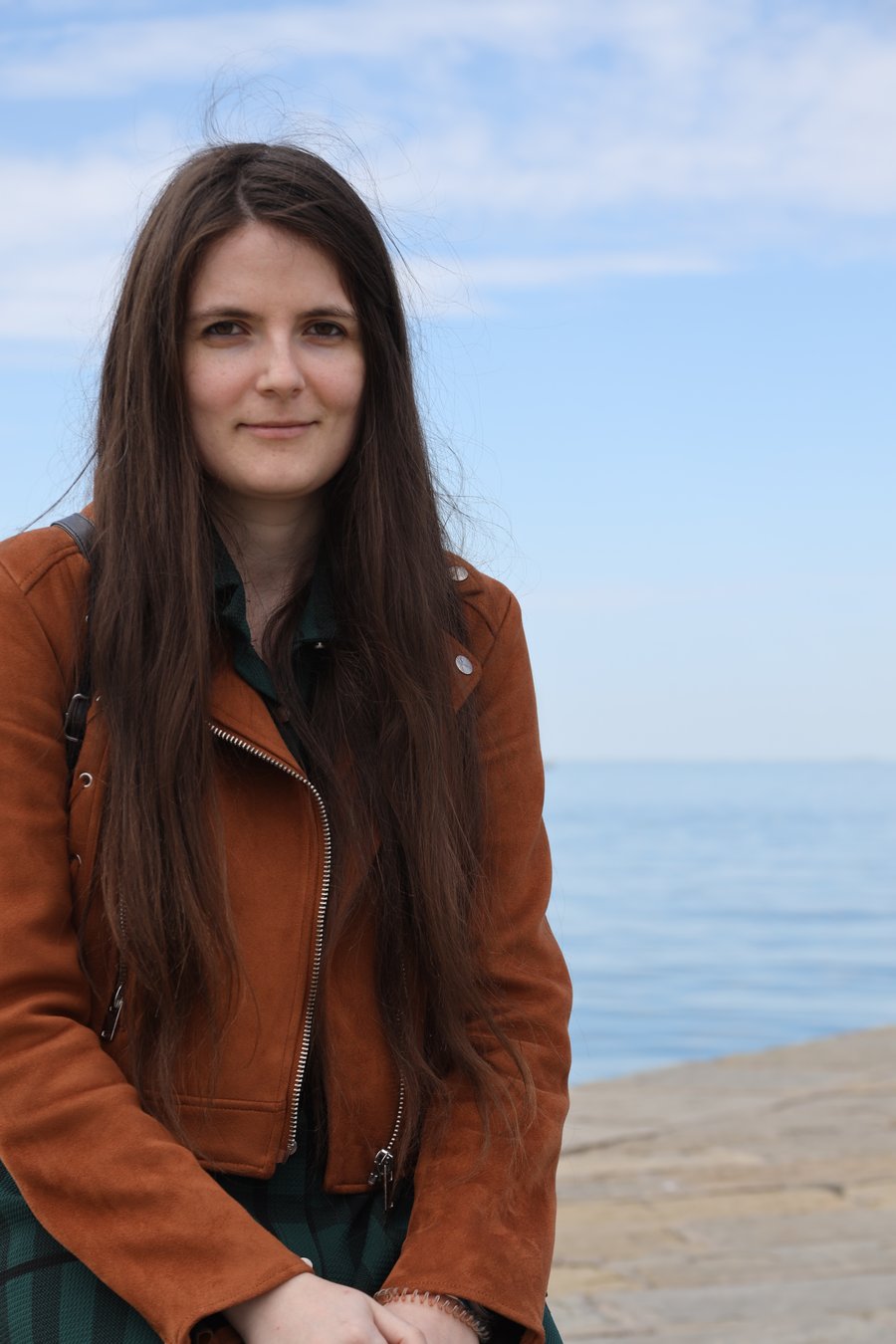
Welcome — I am Alexandra Kaszás.
As a psychologist, I believe that clients are the best experts on their own lives and experiences — in our work together, we draw on this knowledge as we move towards change. My training in psychology and cognitive neuroscience helps me see the person holistically, as a whole, in both body and mind.
As a third-year doctoral student at the Doctoral School of the Budapest University of Technology and Economics, I research schizotypal personality organisation, depression, anxiety, and the cognitive characteristics and changes associated with them. Alongside my doctoral work, I also work in a school and in hospice care — accompanying, above all, people living with changed life circumstances, changes in their health, or serious, life-altering illness.
Building on Rogersian foundations — unconditional acceptance, empathy and congruence — I also use cognitive behavioural therapy (CBT) tools. My aim is for us to create a safe, accepting space where you can grow stronger and gradually regain a sense of control over your own life.
How I work
Person-centred approach
Building on Carl Rogers's outlook: the client is the best expert on their own life. Our shared work rests on unconditional acceptance, empathy and congruence — a safe space where change begins from within.
Cognitive behavioural therapy (CBT) elements
Structured tools for exploring patterns of thoughts, feelings and behaviour. They help make inner processes transparent and support new ways of coping in everyday life.
Cognitive neuroscience
An understanding of the relationship between brain and behaviour complements the psychological work. It helps me see the person holistically, as a unity of body and mind.
- Individual 50-minute sessions
- In Hungarian or English
- In person or online
What I can help with most:
- 01
Psychological support related to changes in physical health
In the case of physical illness or a longer recovery, I help you adapt to your changed circumstances, process the emotional difficulties that come with them, and find a new balance.
- 02
Difficulty adjusting to new situations
At times of moving, changing jobs, family changes or other turning points, I support the process of adaptation, the shaping of new roles and frameworks, and the recovery of emotional balance.
- 03
Developing self-knowledge
A longer inner journey in which the primary aim is not necessarily change, but deeper understanding: to see more clearly why you feel, decide or react the way you do.
- 04
Self-esteem issues
The voice of the inner critic, the feeling of "not being enough" or the constant urge to meet expectations is often built from earlier experiences. In our work together we look gently at where these come from, and at what could offer inner steadiness, security and self-acceptance instead.
- 05
Relationship difficulties
Our relationships often carry recurring patterns, unspoken needs and boundaries that are hard to draw. In the process we map these relational patterns together, and explore how to be present in them more consciously and freely.
- 06
Life-management difficulties, feeling stuck
When the usual tools no longer help and the next step becomes uncertain, support can help the picture gradually clear, and new perspectives and possibilities appear.
- 07
Anxiety and coping with stress
In the process we explore together what may lie behind anxiety or lasting stress, and how to build inner and practical tools that make everyday functioning more sustainable.
- 08
Workplace problems, burnout
In the case of overload, loss of motivation or persistent workplace tension, we look together at what may have led to exhaustion, what external and internal expectations are at play, and how you can gradually find your way back to your own measure, boundaries and resources.
- 09
Career choice
The choice is not only about which profession or course of study would suit you, but also about what brings meaning, motivation and inner connection. At a calm pace, we map your interests, values and options so that your own direction becomes clearer.
How does a process unfold?
Most processes follow a similar arc, but the focus, the methods and the pace are all tailored to you.
- 01
First meeting
An opportunity for me to get to know your difficulties — and for you to decide whether the space feels safe for you.
- 02
Shared focus
Over the first few sessions we put into words what you would like to work on, and what a valuable process looks like for you.
- 03
Working together
We work together weekly or fortnightly, until you have reached the goal you set.
- 04
Closing
We close the process consciously: we look back at what has happened, and at what you take with you.
My professional path
Studies
- 2023 — presentPhD in PsychologyBudapest University of Technology and Economics
- 2021 — 2023MSc in Computational and Cognitive NeuroscienceBudapest University of Technology and Economics
- 2019 — 2021MA in PsychologySpecialisation in clinical and health psychologyKároli Gáspár University of the Reformed Church in Hungary
- 2016 — 2019BA in PsychologyKároli Gáspár University of the Reformed Church in Hungary
Further training
- 2025 — presentCBT consultantVIKOTE
- 2026Hospice basics I–II.Gondoskodás 2000 Kft.
- 2019Clinical psychological application of the Szondi test (licence)Dr. Lipót Szondi Memorial Foundation
Scientific articles, publications
Publications
- 2026
The uncertain self: Intolerance of uncertainty moderates the association of both positive and disorganized schizotypal traits with self-concept clarity in a non-clinical sample
doi.org/10.1371/journal.pone.0352650 - 2026
Mnemonic discrimination performance in anxiety and depression: A systematic review
doi.org/10.1155/da/8826935 - 2025
Magnetic resonance imaging signatures of neuroinflammation in major depressive disorder with religious and spiritual problems
doi.org/10.1038/s41598-025-89581-1
Popular science articles (in Hungarian)
 Why is uncertainty sometimes so hard to bear — and what might our self-image have to do with it?Insecurity is not always visible. From the outside someone may even appear composed, while inside it can be hard to find anything to hold on to: what do I want, what kind of person am I, what truly matters to me?Read the article (in Hungarian) →
 Not the same, yet it feels that way: what does our mood do to our memories?Imagine walking into a meeting at your new workplace. Your colleagues are kind and smile encouragingly — yet something suddenly tightens inside you.Read the article (in Hungarian) →
Get in touch
If you would like to request an appointment or have a question, feel free to reach out. I aim to reply to every enquiry as soon as I can.
- kapcsolat@hullamtoro.hu
For an online consultation, please briefly indicate the nature of your concern in your message, and let me know which days or times of day would suit you best.